Dawenkou Culture
Introduction
The Dawenkou Culture is a prominent Neolithic culture that thrived in what is now Shandong province. Emerging around 4100 BC and lasting until 2600 BC, this culture is renowned for its distinctive pottery, burial practices and its influence on subsequent cultures in the region. It was named after the site of Dawenkou in present-day Shandong, where artifacts characteristic of this culture were first discovered. The Dawenkou Culture is recognized for its advancements in pottery craftsmanship, jade work and the development of hierarchical social structures, as evidenced by archaeological findings. These features marked a significant stage in the progression of prehistoric civilizations in the Yellow River basin.
Historical Background
The Dawenkou Culture developed during the Neolithic period, a time characterized by the establishment of agricultural societies and the use of stone tools. It succeeded the Beixin Culture, which dates back to between 7,300 and 6,100 years ago and is considered a precursor to the Dawenkou. Evolving from Beixin traditions, the Dawenkou Culture thrived along the Yellow River's tributaries, notably the ancient Wenhe River, which nurtured its growth.
This culture is known for its early use of pottery, jade and bone artifacts, which were integral to its daily life and rituals. The Dawenkou society was marked by a complex social hierarchy, which is evident from the differentiation in the size and opulence of burial sites. These elements highlight the culture's significant role in the development of early Chinese civilization, bridging the gap between the Xihe and subsequent Longshan and Yueshi cultures.
Characteristics
Pottery and Artifacts
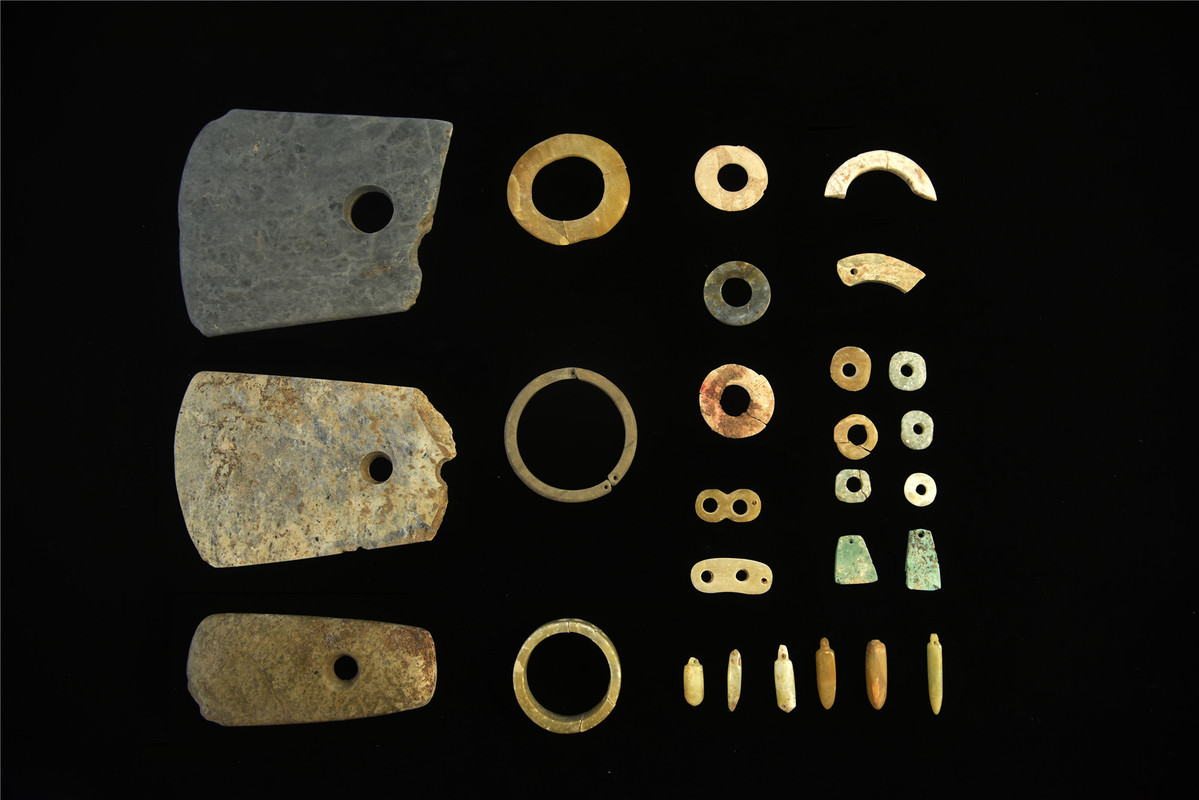
Pottery is one of the defining features of the Dawenkou Culture. Artisans from this period are noted for their painted pottery, which often featured intricate designs. One notable type of pottery is the "gui", a three-legged pitcher used for cooking, which was crafted into various animal shapes, including a dog-shaped pitcher. The pottery from this culture often included elements such as intersecting lines, dots, and triangles that formed petal-shaped patterns, vividly portraying the aesthetic sensibilities of the time. The craftsmanship extended to jade artifacts, which included ornaments such as bracelets, rings and earrings, indicating the culture's high level of artistry and its role as a jade utilization hub. Additionally, bone and stone tools were used in daily life and as burial goods, highlighting the technological advancements of the Dawenkou people.
Burial Practices
The burial customs of the Dawenkou Culture offer significant insights into its social structure and beliefs. Tombs were clearly differentiated by social hierarchy, with large tombs featuring single coffins encased in outer coffins and accompanied by jade ornaments and ceramic utensils. Medium-sized tombs, which were more numerous, typically contained single inner coffins and ceramic items. These burial practices suggest a pronounced social ranking system, with the size and structure of the coffins and the type and number of burial goods reflecting the status of the deceased. The discovery of jade axes, cinnabar pieces and other burial artifacts further underscores the importance placed on the afterlife and the social stratification within the Dawenkou community.
Geographical Distribution
The Dawenkou Culture was primarily concentrated in the lower reaches of the Yellow River, within what is now Shandong province. Key archaeological sites, including Jinan, Linyi and Tengzhou, have provided a wealth of information about this culture's geographical spread. These sites reveal evidence of extensive settlement patterns, including house ruins, tombs and pottery kilns, indicating that the culture had a broad geographic footprint and a significant impact on the region. The discovery of sites such as Jiaojia and Gangshang further highlights the culture's reach and its role as a political, economic and cultural center during its time.
Chronology and Periodization
The Dawenkou Culture is typically divided into three phases: early, middle and late. The early phase, beginning around 4100 BC, is characterized by the emergence of distinctive pottery styles and the initial development of social structures. The middle phase, which continued until approximately 3500 BC, saw further advancements in pottery and jade craftsmanship, as well as the establishment of more complex societal hierarchies. The late phase, lasting until about 2600 BC, is marked by a peak in cultural sophistication and the gradual transition to the subsequent Longshan Culture. This periodization highlights the evolutionary trajectory of the Dawenkou Culture and its contributions to the broader Neolithic development in China.
Cultural Significance
The Dawenkou Culture holds significant importance in understanding the prehistoric development of Chinese civilization. Its advancements in pottery and jade work represent a high level of artistic achievement that set the stage for future cultural innovations. The social stratification evident in burial practices reflects the emergence of hierarchical societies, which would become a defining feature of later Chinese cultures. Additionally, the Dawenkou Culture's influence is seen in its contributions to the development of agricultural practices, settlement patterns and ritualistic traditions that shaped the evolution of subsequent cultures in the Yellow River basin.
Archaeological Discoveries
Archaeological sites associated with the Dawenkou Culture, such as Jiaojia, Gangshang and Chengang, have yielded a wealth of artifacts that provide insights into the culture's lifestyle, social structures and artistic achievements. Discoveries at these sites include pottery, jade ornaments, bone tools and evidence of residential patterns, all of which contribute to a deeper understanding of this significant Neolithic culture. The findings have been instrumental in piecing together the cultural and historical context of the Dawenkou people, offering a window into their daily lives, beliefs and societal organization.
Influence on Later Cultures
The Dawenkou Culture's influence on subsequent cultures is evident in the continuity of certain traditions and practices. As a precursor to the Longshan and Yueshi cultures, the Dawenkou Culture set the foundation for the development of more complex societies in the region. Its advancements in pottery and jade work were inherited and further refined by later cultures, while its social structures and burial customs provided a model for hierarchical organization. The cultural exchanges and interactions facilitated by the Dawenkou Culture helped shape the trajectory of early Chinese civilization, leaving a lasting legacy that is still studied and appreciated today.








